

1. What Is a Vacuum Insulated Bottle?
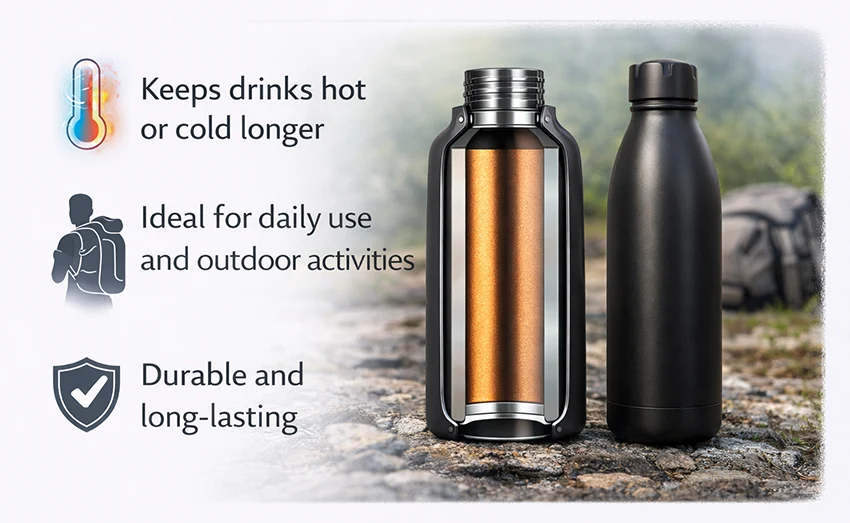
A vacuum insulated stainless steel bottle is built with two layers of stainless steel and a vacuum-sealed space between them. By removing air from this gap, heat transfer is minimized, allowing the bottle to maintain the temperature of the liquid inside for extended periods.
This construction has become the industry standard for premium drinkware, widely used in retail brands, corporate gifting, and private label products.

500/750ML Double Wall Vacuum Insulated Water Bottle

2. Practical Performance in Daily Use
Vacuum insulation offers reliable performance in real-world use:
- Hot beverages stay warm for 8–12 hours
- Cold drinks remain chilled for 12–24 hours
This makes these bottles suitable for:
- Daily commuting
- Office use
- Outdoor activities such as hiking or camping
User Experience
- The exterior stays comfortable to hold, even with hot liquids inside
- No condensation forms when used with cold drinks
- Stainless steel helps preserve the original taste of beverages
From a usability standpoint, vacuum bottles provide a consistent and dependable experience, which is why they are preferred in higher-end markets.

350ML Double Wall Stainless Steel Thermal Coffee Mug
3. Materials and Build Quality
Most vacuum bottles are made from:
- 304 stainless steel (standard food-grade material)
- 316 stainless steel (enhanced corrosion resistance for premium lines)
The double-wall structure improves:
- Durability
- Resistance to dents and deformation
- Overall product lifespan
This longer lifecycle also supports sustainability positioning, which is increasingly important for global buyers.
4. Cost Structure and Manufacturing Considerations

12/17OZ Stainless Steel Vacuum Thermos Bottles
Compared to other bottle types, vacuum insulated bottles involve more complex production processes.
Key Cost Factors
1. Material Usage
Two layers of stainless steel increase raw material cost.
2. Vacuum Sealing Process
Air extraction and sealing require specialized equipment and strict quality control.
3. Welding and Finishing
Precision welding, polishing, and leak testing add to labor and production time.
4. Surface Treatment
Common finishes include powder coating, matte painting, and special coatings, all contributing to final cost.
Cost Positioning
- Typically 2–3 times the cost of single wall bottles
- Around 30–50% higher than non-vacuum double wall bottles
However, the higher cost is balanced by stronger market pricing and perceived value.

5. Customization Opportunities
Vacuum insulated bottles offer broad customization flexibility, making them a strong choice for OEM and private label projects.
Branding Methods
- Laser engraving for a clean, permanent finish
- Screen printing for cost-efficient bulk orders
- UV printing for multi-color designs
Surface Finishes
- Matte or glossy coatings
- Powder-coated colors
- Rubberized finishes for a soft-touch feel
Functional Options
- Different lid styles (screw cap, flip lid, straw lid)
- Accessories such as tea infusers or filters
- Multiple size options to match different markets
Packaging
- Retail-ready packaging
- Gift boxes for promotional use
- Eco-friendly packaging solutions
For suppliers like Brilliant, this level of flexibility allows clients to develop distinct, brand-specific products rather than generic items.
6. Market Position and Business Value

18oz Stainless Steel Vacuum Insulated Travel Water Bottle
Vacuum insulated bottles are positioned in the mid-to-high-end segment of the market.
Typical Buyers
- Retail brands building their own product lines
- Corporate clients sourcing promotional gifts
- E-commerce sellers (Amazon, Shopify)
- Sustainability-focused brands
Commercial Advantages
- Higher perceived value
- Better margins
- Strong consumer demand
These products are often used not just as drinkware, but as brand-building tools.
7. Advantages and Limitations

18oz Stainless Steel Vacuum Insulated Travel Water Bottle
Advantages
- Excellent temperature retention
- Durable and long-lasting
- Wide customization options
- Strong market demand
Limitations
- Higher production cost
- Heavier than single wall bottles
- Longer production lead times
Custom vacuum insulated stainless steel bottles represent the most advanced and commercially valuable category in stainless steel drinkware.
They combine reliable performance with strong customization potential, making them well suited for brands looking to position themselves in the mid-to-premium market.
For manufacturers and suppliers such as Brilliant, this category plays a central role in supporting OEM projects, private label development, and long-term client partnerships.


