

Stainless steel water bottles are widely recognized for their durability, safety, and long service life. The material used in these bottles plays a key role in determining product quality, performance, and suitability for daily use. Compared with plastic containers or glass bottles, stainless steel offers a balanced combination of strength, corrosion resistance, and hygienic properties, making it one of the most popular materials for reusable drinkware.
Food-Grade Stainless Steel

18/8 Food-grade 500/750ML Stainless Steel Insulated Water Bottle
Most high-quality stainless steel water bottles are made from food-grade stainless steel, commonly known as 18/8 stainless steel or 304 stainless steel. This material contains approximately 18% chromium and 8% nickel, which provide excellent resistance to rust and corrosion.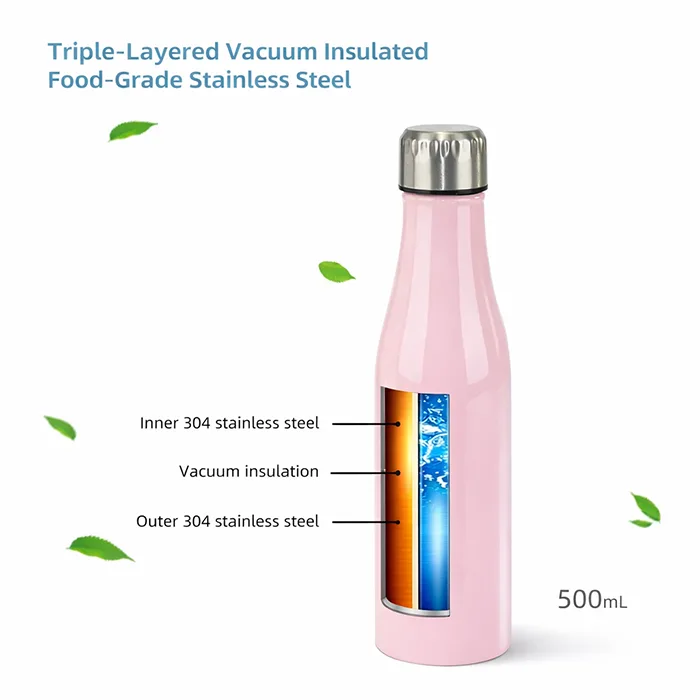
Food-grade stainless steel is widely used in kitchen equipment, food processing tools, and beverage containers because it does not react with most liquids. It does not absorb odors, flavors, or stains, which helps maintain the natural taste of water or beverages stored inside the bottle.
Another advantage of food-grade stainless steel is its durability. The material is resistant to impact and deformation, allowing bottles to withstand everyday use in environments such as offices, gyms, travel, and outdoor activities.
304 Stainless Steel

500ML Double Wall 304 Stainless Steel Insulated Thermos Bottle
Among the different stainless steel grades, 304 stainless steel is the most commonly used material for water bottles. It provides an excellent balance between performance, safety, and cost.
304 stainless steel has strong corrosion resistance, which prevents the bottle from rusting even after long-term exposure to moisture. It also maintains structural stability at both high and low temperatures, making it suitable for bottles designed to hold hot coffee, tea, or cold drinks.
Because of these characteristics, many manufacturers choose 304 stainless steel for both the inner and outer layers of insulated bottles.
201 Stainless Steel
Some stainless steel bottles use 201 stainless steel for certain external components. This material is more economical than 304 stainless steel while still offering good strength and durability.
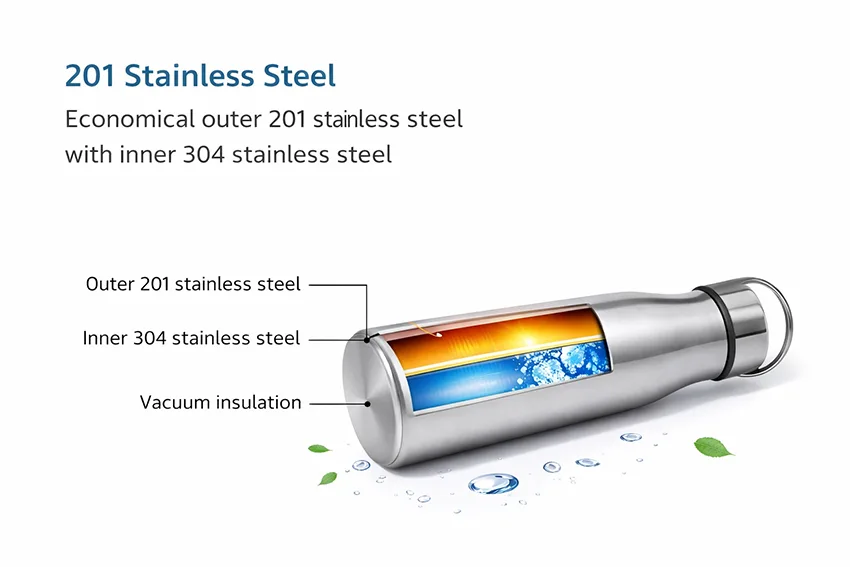
Although 201 stainless steel has slightly lower corrosion resistance compared with 304 stainless steel, it can still perform well in many applications, especially when used on the outer shell of the bottle. Many manufacturers combine 304 stainless steel for the inner liner with 201 stainless steel for the exterior structure to balance cost and performance.
Double Wall and Vacuum Structure

Stainless Steel Vacuum Sports Bottle
The material used in stainless steel water bottles also supports different structural designs. Many modern bottles are produced with double wall construction, where two layers of stainless steel are combined to create insulation between the walls.
In vacuum insulated bottles, the air between the two layers is removed to form a vacuum layer. This structure significantly reduces heat transfer, helping beverages stay hot or cold for extended periods of time. The stainless steel material is ideal for this structure because it maintains strength and stability even when vacuum sealing is applied.
Surface Finishes and Coatings

12OZ/18OZ Stainless Steel Vacuum Bottles With Handle
Stainless steel bottles can also receive different surface treatments to improve appearance and durability. Common finishes include brushed stainless steel, powder coating, matte coating, and color painting.
Powder coating is particularly popular because it adds an additional protective layer while providing a wide range of color options. The coating also improves grip and scratch resistance, making the bottle more comfortable to use during sports or outdoor activities.
Safety and Environmental Benefits

500/750ML Stainless Steel Insulated Bottles
One of the key reasons stainless steel water bottles are widely used is their safety and environmental benefits. Unlike some plastic materials, stainless steel does not contain BPA or other chemicals that may raise health concerns. The material is also highly recyclable, which supports sustainable manufacturing practices.
Because stainless steel bottles are reusable and long-lasting, they help reduce the need for single-use plastic bottles. This makes them a practical option for individuals and organizations seeking more environmentally responsible drinkware solutions.
The quality of a stainless steel water bottle depends largely on the materials used in its construction. Food-grade stainless steel, particularly 304 stainless steel, provides the durability, corrosion resistance, and safety required for everyday hydration. When combined with advanced bottle structures and protective coatings, stainless steel becomes a reliable material for producing high-quality reusable drink bottles used worldwide.


